Sustainable Living in Monferrato: Eco-Friendly Property and Rural Life
Sustainable Living in Monferrato: Eco-Friendly Property and Rural Life
Rural Piedmont has always been sustainable in the original sense of the word — a landscape managed by generations of farmers who understood that taking care of the land was the precondition for the land taking care of them. The vines, the hazelnut groves, the vegetable gardens, the fruit orchards: all maintained in a relationship with the territory that was inherently ecological before the word became fashionable. For property buyers who want to live more sustainably, Monferrato offers a starting point that cities and suburbs cannot match.
This guide covers the practical side of sustainable living in a Monferrato farmhouse — renewable energy, water management, natural building materials, organic food production and the ecological advantages of rural Piedmontese life.
Solar Energy: The Monferrato Sunshine Advantage
The Monferrato hills receive approximately 1,400-1,600 hours of sunshine per year — sufficient to make photovoltaic solar a commercially and environmentally worthwhile investment. A 6kWp solar system on a south-facing Monferrato farmhouse roof generates approximately 6,000-7,000 kWh per year — enough to cover the majority of a household’s electricity consumption, and in summer significantly more than a typical household uses. Excess generation is fed back to the grid at feed-in tariff rates.
The combination of solar generation with a heat pump for heating and cooling — replacing the traditional oil boiler — creates an almost entirely electricity-powered energy system that, on annual average, can be close to carbon-neutral. The investment in a 6kWp system plus installation costs approximately €8,000-€12,000 in 2026 and typically pays back in 7-10 years through electricity savings. Italian government incentives (bonus fotovoltaico) can further reduce the net cost for eligible buyers.
Heat Pumps: The Modern Alternative to Oil Heating
The oil boiler is still the most common heating system in older Monferrato farmhouses — and one of the most expensive and carbon-intensive ways to heat a building. Replacing an oil boiler with an air-source heat pump reduces both running costs and carbon emissions significantly. A heat pump extracts heat from the outside air (even in winter, when temperatures are above about -5°C) and delivers it into the building at coefficients of performance of 3-4 — meaning for every unit of electricity consumed, 3-4 units of heat are delivered.
Rainwater Harvesting and Water Management
Water is a resource worth managing carefully in Monferrato, where summer drought can limit supply from municipal mains in some areas. A rainwater harvesting system — collecting roof runoff in an underground cistern — provides water for garden irrigation, pool top-up and in some configurations (with appropriate filtration) for household use. A well-sized cistern of 20,000-50,000 litres can provide significant summer irrigation capacity from the winter and spring rainfall.
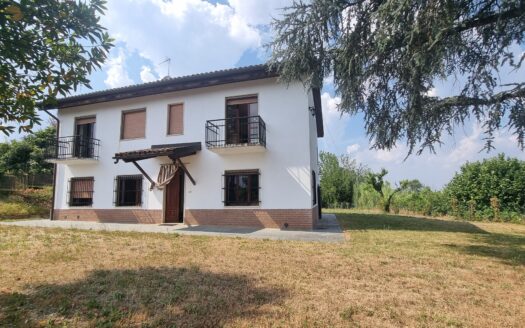
Many historic Monferrato farmhouses already have cisterne — traditional underground water storage tanks built from the same brick as the house — that were used before mains water supply reached the hills. Restoring and connecting these cisterns as part of a renovation is both historically appropriate and practically useful. An agronomist or hydraulic engineer can assess the existing infrastructure and design the appropriate modern integration.
Natural Building Materials: The Sustainable Choice That Also Looks Best
The most sustainable building materials for a Monferrato farmhouse restoration are also, in most cases, the most aesthetically appropriate: hydraulic lime for plasters and renders (which allows the building fabric to breathe and avoids the condensation problems associated with synthetic renders), local brick for any new masonry work, terracotta tiles for floors (fired from local clay, extremely durable and entirely natural), and untreated or naturally treated wood for floors, doors and windows.
Natural hydraulic lime plaster, applied to a historic brick wall, creates an internal surface that regulates humidity, absorbs carbon dioxide from the air as it cures, and lasts for decades without the cracking and delamination problems of modern synthetic plasters. It is also the material that gives restored Monferrato farmhouses their characteristic quality of light and texture — warm, slightly irregular, completely alive.
Growing Your Own: The Kitchen Garden and Orchard
One of the most immediately accessible forms of sustainable living in a Monferrato farmhouse is the kitchen garden (orto). The climate and soil of the Monferrato hills are ideal for a wide range of vegetables — tomatoes, peppers, courgettes, beans, salads, herbs — that produce abundantly in summer with minimal care. Many farmhouses already have walled orto spaces that need only clearing and planting. The addition of a small orchard — apple, pear, fig, plum, quince — provides fresh fruit through autumn and preserving opportunities for the winter.
The Ecological Advantages of Rural Living
Living in a farmhouse in Monferrato has ecological advantages that urban living cannot replicate, regardless of recycling habits and energy tariffs. The absence of urban heat island effect, the proximity to natural ecosystems, the ability to compost all organic waste, the reduced need for packaged food when buying directly from local producers, the lower transport requirements when local needs are met locally — all of these factors add up to a significantly lower environmental footprint than equivalent urban consumption.
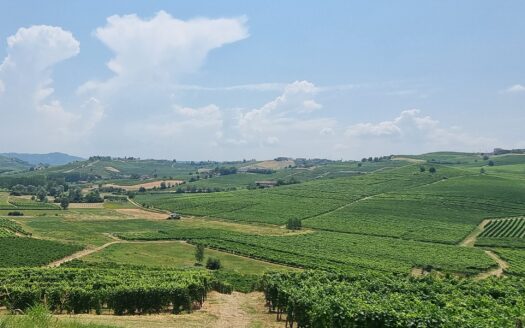
The vineyard landscape of Monferrato is itself an ecological management system — the vines stabilise the hillside soil, the vine canopy moderates temperature extremes, the biodiversity of the vine ecosystem supports a rich insect and bird population. Living within and caring for this landscape is a form of ecological engagement that has no urban equivalent.
Sustainable Tourism: The Ecological Case for Holiday Rentals
Property owners who rent their Monferrato farmhouse to guests who come to experience the wine, the truffle and the Piedmontese food culture are facilitating a form of tourism that has a much lower environmental impact than the package holiday model. Guests who stay in a farmhouse, eat at local restaurants, buy directly from local producers and explore the territory on foot or by bicycle have a much lighter ecological footprint than the same travellers staying in a large hotel complex in a resort destination.
For property owners who want to communicate their sustainability commitment to potential guests, Airbnb’s sustainability features — the ability to indicate solar power, electric vehicle charging, organic garden and other eco credentials — are worth using. A growing segment of the holiday rental market actively seeks sustainable accommodation, and properties that can demonstrate genuine eco-credentials have a competitive advantage in this segment.
Sustainability as a Way of Life in Monferrato
Sustainable living in Monferrato is not about sacrifice or ideological commitment — it is about alignment with the natural rhythms and resources of a place that has been sustainably managed for centuries. The wine producers who farm their vines with minimal intervention, the cheese makers who use the milk of cows that graze the hillside pastures, the bakers who make bread with locally milled flour: these are not sustainability statements, they are the ordinary practice of people who understand their relationship with the land.
For property buyers who want to live more sustainably, Monferrato offers not just the infrastructure for doing so (solar potential, building materials, local food systems) but the cultural context in which sustainability is simply how things are done. VerdeAbitare is happy to discuss the specific sustainability possibilities for properties you are considering.
Read also
→ Living in Monferrato as an Expat
→ Renovating a Farmhouse in Piedmont
→ Restoring a Historic Farmhouse in Monferrato
→ Monferrato Food Guide for Property Buyers